Effective Therapy Research & Development
Research Focus & Challenge
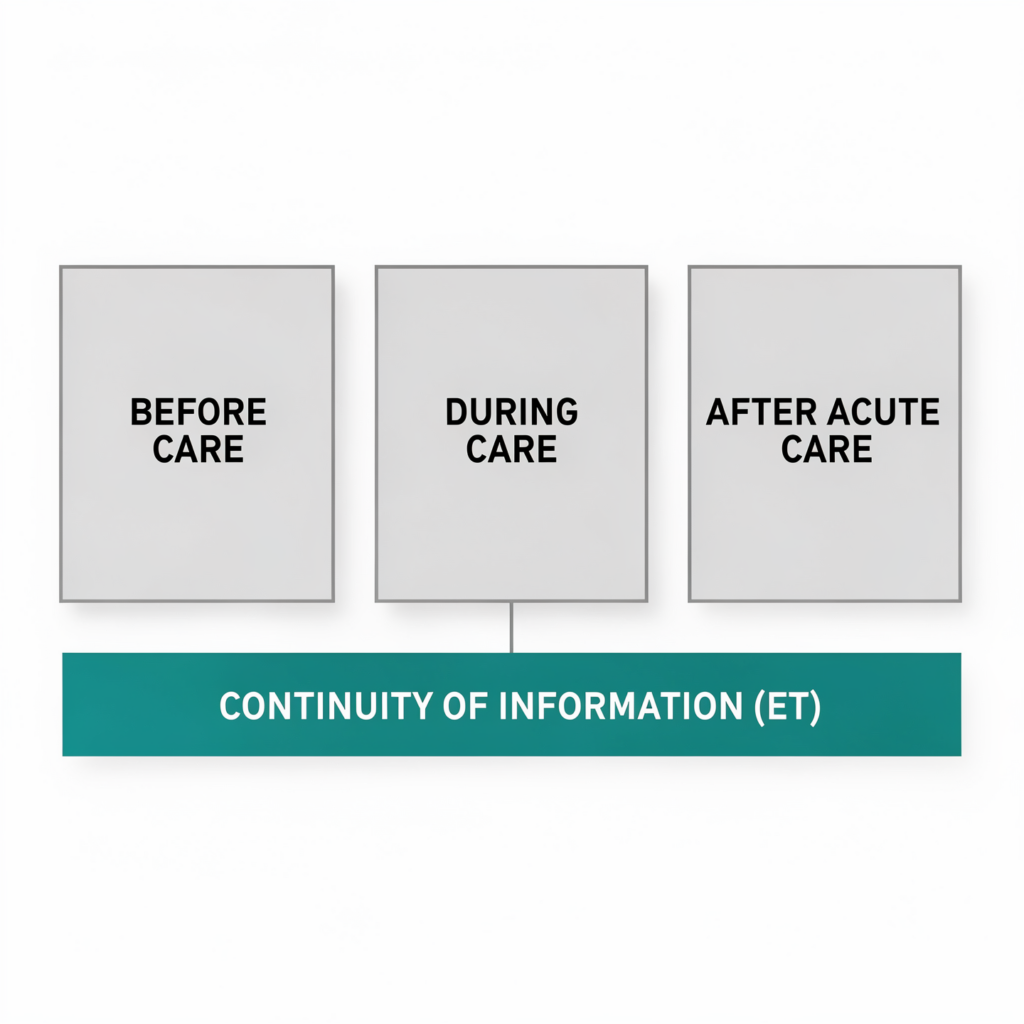
Mental health care is episodic, while distress and recovery are continuous. Critical information is lost across wait times, transitions, and between encounters; a structural challenge with ethical and practical implications for long-term outcomes.
Our work examines continuity of information as an infrastructure challenge that operates alongside clinical care, rather than as a treatment or diagnostic intervention.
We explore how information loss across wait times, transitions, and care settings affects burden, durability, and ethical delivery of mental health support.
This research is exploratory and does not assume therapeutic claims, automated decision-making, or unsupervised clinical deployment.
Scope and boundaries
Scopes and Boundaries
Effective Therapy Research & Development focuses on the design and study of infrastructure that supports continuity of information in mental health care.
This work is conducted in collaboration with clinical environments and communities, while not delivering treatment, diagnosis, or automated clinical decision-making.
Pilot activities, where applicable, are exploratory in nature and conducted under appropriate ethical oversight and human supervision.
Who we are
Effective Therapy Research & Development
Effective Therapy Research & Development (ET-R&D) is an interdisciplinary research initiative focused on the design and study of ethical, clinical-adjacent infrastructure for mental health care.
Our work brings together researchers, clinicians, and technologists to examine how continuity of information across time, transitions, and care settings can support durability, reduce burden, and strengthen ethical practice.
ET-R&D is led by Nofyah Shem-Tov, Avi Elias, Evan Askanazi, Gershon Kagan, and Dotan Cohen, and collaborates with clinicians, researchers, and institutions engaged in mental health systems, trauma-affected communities, and care innovation.
This work is exploratory and conducted alongside clinical environments, without delivering treatment, diagnosis, or automated clinical decision-making.